
The NFL salary cap and its many aspects are commonly misunderstood concepts in todays NFL. One nuance in particular, is very rarely addressed by the media or NFL executives and has many interpretations: the “rookie pool”.
The “rookie pool” is the coined term for rookie cap space, or the amount of money allocated to a team post-draft to sign their newly selected players. Around a week or so after the NFL Draft, every team is given a set amount of money to sign their rookies based off each draft slot and its monetary value.
This becomes tricky however, when you have to draw the connection from rookie cap space to a team’s actual cap space. In actuality, the rookie cap space has very little impact on the true salary cap of the team in question. For example, a team can very well have a true salary cap of $2M, but a rookie cap space of $9M and not be over the salary cap at all, even after utilizing all 9 million of those dollars in rookie cap space. Here’s how.
The new CBA of 2020 issues a “rule of 51”, which basically means that between the beginning of the new league year and September, only the cap hits of the top 51 players will be counted towards a teams true salary cap. Since there are a total of 90 players on a team between the new league and September, the only way to manage the cap and keep it under the total salary cap is by passing this rule.
Any player outside of this top 51 will not have their base salary count towards the true salary cap. Such players will only have prorated money-which will largely be signing bonus, but could also be roster or option bonuses-count towards the cap. If they are outside the top 51 in the first place, the chances are that the players signing bonus isn’t particularly high to make a significant impact on the cap.
For example, let’s say a team has the following draft slots, with these hypothetical base salaries for each slot.
1st round pick: 2.5M
2nd round pick: 1.75M
3rd round pick: 990k
4th round pick: 880k
5th round pick: 750k
6th round pick: 690k
7th round pick: 660k
The league will allocate about 8.25M in total rookie cap space for Team X to sign their rookies under. Overall, a rookie contract is mostly set in stone, and the only real negotiation occurs in timing of the contract payout, and offsetting language. As a result, we can mostly assume cap charges of each player selected by Team X. Most likely, only the the first 4 players selected by Team X will count against the teams true salary cap. The rest of the players selected fall out of the “top 51”, and as a result will only have their minuscule base salary count towards the true salary cap of Team X.
Even if Team X were to have 2M in true salary cap, they would have very cap dollars from rookie contracts actually affecting their true cap space of 2M. Even then, you may note that adding the cap charges of the top 4 picks would equate to a value higher than 2M. However, as these 4 players make their way into the top 51, 4 players that were already in the top 51 are now moved out of the list.
This is why the rule of 51 is often referred to as a ladder. Before the draft, the 50th player on the roster could have a salary of 1.25M, but after the draft, the 50th spot now has a cap charge of 1.5M due to incoming rookies. As players join the top 51, an equal number of players must leave the top 51 in order to keep the functions of the rule in tact.
This rule has allowed for teams to maneuver and manipulate draft choices to their liking, and allows for them to do so in a cap friendly manner. In essence, teams can very easily utilize all of their rookie pool money, which almost always cancels out with remaining total cap space, and still have money left over. This is why teams like the Saints and Cowboys’ front offices are able to operate with significant draft capital on an efficient level with seemingly minimal cap space. For a team like the Eagles, with 11 draft choices, 3 of which come in the first 32 picks, they will clearly be designated a larger cap for rookie cash.
Hopefully, this should clarify any questions as to how teams allocate their cap resources throughout the team, specifically with draft picks and rookie contracts.
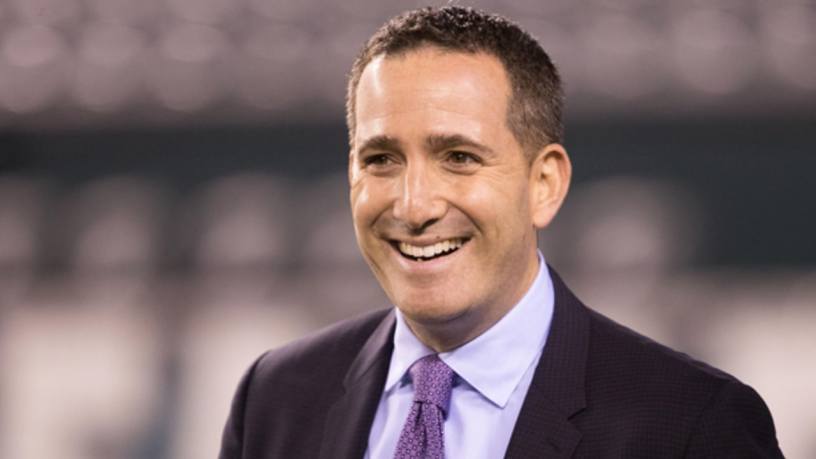
Photo Credits: Philadelphia Eagles
 Front Office Scouting